Showing posts with label Iraq. Show all posts

Sunday, March 14, 2010

Kadim Al Sahir - Alrasm bil Kalimat (Album Review)

Kazem_L

I bought the album when I was in Abu Dhabi last year October. It was around that time when the album first came out. During my three weeks stay the only music played at the Abu Dhabi Carrefour super markets were songs from that album.

Kadim Al Sahir is a pioneer and made his mark making songs with lyrics in Classical Arabic. I don't listen frequently to songs from such a genre, so I have to be careful with what I say about Al Sahir songs. Having said that, it does not mean I did not enjoy songs like “Hel Endaki Shak?” (Do You Have Doubts?) and “Ikhtary” (Make A Choice) from this master of profession Iraqi singer. Speaking of those two songs, mind you there is some 9 years gap between each song when I first listened to them, but both carry some special magic formula – here I am not making comparison or to say that they are better or worse than other Al Sahir songs like “Layla” (not Eric Clapton), or “Madrasa Al Hob” (School of Love), or even “Qooly Ohiboka” (Say You Love Me)…etc

Now that I talked about how I see Al Sahir’s music, I want to say that the magic formula I just mentioned is felt with a big dose on the new album, “Alrasm Bil Kalimat” (English: Drawing with Words), especially on the title song, but lets stop here, I will talk about this song in a bit.

All songs on “Alrasm Bil Kalimat” album were composed by Al Saher himself, except for “Al Jareeda” (The Newspaper), a song with lyrics written in Gulf-Region dialect, and composed by Mohammed Shafiq, A Saudi musician who worked in the past with Al Sahir on songs from previous albums.

The album kicks off with “habeebety” (My beloved). The lyrics of the song are taken from a poem written by the legendary Syrian poet Nizar Qabbani. Not my favorite song from the album, but I liked most the use of wa-wa guitar effects. From reading the lyrics and listening to the music I imagined a man deep in love with his woman, do passionate about every move, look, touch, even with the way she dance. The video clip of the song translated the song in the best way possible and as I anticipated. The second song is the orchestra like hit single “Al Mahkama” (The Court). This is an epic song, and to many it is the surprise of the album. The song is a duet with Moroccan female singer Asma Lemnawar. I read somewhere that the song originally made to have Al Sahir singing the song with Syrian female singer, Asala but due to financial differences such cooperation was doomed. Anyway, If these rumors were true, the second best choice is resulted in a masterpiece. The lyrics of the song is written by the great poet Kareem Al Iraqi, a man known for his god-gifted ability to bring words to live with deep words and passionate sentences. No one could or can beat this man in such a style. The song tells the story of a man and a woman standing virtually before the judge and pleading for justice, each presenting his case and tell stories of pain, agony, jealousy, bad friendship, and what was in the past and what has become… but… did they lost the love they had for each other?… contradiction within human nature... happy ending?

Below is the official video clip of the song, which was filmed in Ukraine, and directed by Hussain D’ebis.

There are six songs from the album performed with Iraqi dialect. Having that number of songs in Iraqi dialect has indeed boosted my support for this album, not being bias here, but the music is so beautiful that no one can just dare to skip from one song to the other. Each song carried a different flavor, musically, of course: there is the traditional Choby dance on “600 boosa” (600 Kisses). I was expecting the song to be played live when I attended Al Sahir's concert a couple of months ago in Brussels, but that did not happen. “Daggeet ween il bab” (Knocking the Door) is another Iraqi dialect song and have the same feeling as songs from al maqam al iraqi songs, such as "Gulli ya Hilo" or "Ghali wil Nabi Ghali". Al Sahir does not need to prove anything to anyone, but putting traditional musical elements to a newly created song like this is another living testimony of his genius. The next song, “Iskut” (Don’t say a Word) has a spoken words intro, I am not a big fan of this, but when the music starts till the end (it did not need a number of times of listens), it makes it one of my favorites from that album, especially with the high pitch part in the middle of the song, just stunning. A big salute to the way this song is mixed too. Another epic song from this album is “mo tabee’y” (Not From This World), it falls in the same realm as "AlMahkama", in my opinion, but sang with Iraqi dialect. It is a song that is like another piece of jewelery presented in a luxury box to the listener, a fantastic story telling of a man listening to his best friend who is torn apart by the thin line between love and hate. The last, but not least is the song “Il Hilim” (The Dream): gives me the impression that this song is an attempt to approach Lebanese and Syrian listeners, yet, this mid-slow tempo (I call it "saltana style") is by no means considered as commercial or a fills-up for the album. I just love to repeat the beautiful intro of the song before I pull my finger away from the CD player to listen to the song as a whole.

If I want to talk about the title song from this album it would needs a separate post to write about, so I will keep it brief, especially when I see myself ignoring the rest of the album is a sort of injustice, in my opinion, and to this great musician (and I have to mention his band) and to the effort he put on each song. For that reason I decided to write a full album review, as already seen.

The song “Alrasm Bil Kalimat” (Drawing with Words) is composed by Kadim Al Sahir himself and the lyrics are taken from a poem written by Nizar Qabbani in 1966 – a poem that generated a lot of critics then because of the language and reference to a lot of details in the female body. "Don't ask me to recall my past life, as the story is long, my queen. You find me in every era, like I am millions years of age." It is a story about a man looking back at his past glories, his conquests in the land of sirens, and what has become of him today; a decaying soul, incapable of love and passion, the pen and the paper became his only salvation.

The music of the song was done using heavy symphonic arrangements. I felt like 9.34 minutes is too short for such a magnificent piece of music. The song is warm and powerful, rich with its musical elements; genius to merge classical music instruments in such a way with Arabic music style and scales i.e. maqams.

The mastering and mix of two songs from the album “Alrasm Bil Kalimat” (Drawing with Words)has been done at the Masterdisk Studios in Paris, France, but the rest of the album was mastered and mixed at the AVATAR studios in New York June 2009. This is the same recording studio that hosted a great number of music pioneers such as Paul McCartney, Paul Simon, John Mayer, and Al Di Meola.

For heavy metal fans, this is the same studio where progressive metal legends Dream Theater recorded their superb albums “Black Clouds & Silver Linings” and “Systematic Chaos”.

To summarize the above, the songs are like priceless paintings that depicted love, relationships, emotions such as shyness, sorrow, contemplation, deprivation and sleepless nights, as well as good and bad friendship.

Final word, buy this album if you didn’t, listen to the songs, enjoy perfection in music making and its arrangement

Tuesday, January 19, 2010

Cartoons On Iraqi TV

This post about cartoons, specifically the most famous cartoons millions of Iraqi children used to watch on TV in the early and mid1980's when a "big shift" was taken by officials at the TV station from showing Eastern European made cartoons and to focus on Arabic dubbed-Japanese animation.

In the late 1970's, or maybe earlier, cartoons from Poland, such as the semi-silent type of cartoons like the polish cute adventures of Lolek & Bolek were the most famous children animation. My brother and I used to imitate those two characters and try to re-live their adventures.

It worked, most of the times.


Another famous Polish cartoon character was Reksio, the cute puppy who was famous for his human-like body-stretching after his night sleep, and his ability to learn fast from his mistakes and teach other pets good things about life around them.

I loved his tip-tapping using four legs from time to time


The "shift" I mentioned in the beginning to Japanese animation was taken in the early 1980's, thanks to Lebanese media companies and their excellent work of Classic-Arabic language dubbed cartoons, and making use of voices of famous Lebanese actors like Abdel Majid Majthoob, Mahmood Sa'eed and Jihaad Al Atrash. It became a dilemma when other Arab countries followed suit, such as Kuwait, Iraq, Jordan and Egypt: the breath taking adventures of Adnan and Lina (or Future Boy Conan, as it is called in its orignial version), is a great example.


Anyone interested in the official website of this cartoon character, click here (in Japanese)

However, "Sandy Bell" was girl's all-time favorite. I was mostly interested in her van/ minibus when she grew up in later episodes and started working as a journalist.


There were other cartoon series, such as Zeena and Nahool, a story about the adventures of two bees (Zeena female, Nahool male) in the vast and mysterious green forest. I think the success of that series prompted authorities to buy another "Bee adventure" show, I am referring to the ultra-depressive bee Bashar, who spent the whole series looking for his mother.

Does anyone know the link between that bee, Bashar, and Saddam Hussein?

Another cartoon series that gained instant success from the first episode was "Lady Oscar". it was about a young woman in France who has been raised as a man to become her father's successor as leader of Versailles Palace Guards, and whom later becomes very close to French queen, Marie Antoinette, before and after the French Revolution.


During that time I noticed that some episodes of that show were edited. Some episodes were shorter in length / time than previous ones. I believed that the reason was that some scenes were axed (by censorship) on a number of times. After all these years, thanks to the internet to prove my theory right, because I don't recall seeing a romantic scene like the below


In order to provide variation to the material shown on TV, it is just a speculation though, there was in the middle of all this "Japanese-animation-mania by Iraqi TV officials", Barabpapa came along, a family of colorful-shape-shifters, which became the inspiration for many to have their pictures, on school-bags and magazines, for example.


I still doubt that Iraqi TV bought all episodes from this series, or maybe one season, because this show is repeated never-seen-before shows on Dutch TV, to this day .

On a related matter where uncompleted animation show, I add "Faris Al Fadha''" or Captain Future or Kyaputen Fyūchā, as its called by original makers. I watched every single episode of that series and I was convinced that not all were shown on Iraqi TV then. However, that was one fantastic show.

It was a big inspiration to me when I used to draw and write about science fiction at younger age. Maybe that was the reason


After all these years, traveling and watching television shows in different countries, I became more convinced how skilled are those people used to be responsible for the children programs department at Iraqi TV. The material provided by the officials then were not something that can by any means considered as outdated, as I thought back then - I was furious then, because TV did not show Spider-man or other Marvel or DC comics super hero characters.

These compliments extend itself to include those highly-skilled men and women who used to bring joy (and education too) to millions of Iraqi children with their work and effort on "Majallaty" and "Al Mizmar" - both were children magazines that included comics by different Iraqi artists. It also included educational information on history, technology, society, in addition to competitions and games, such as puzzels.

Without emphasizing on government's influences, the work those great men and woman did for Iraqi children in the media is something highly appreciated. In the middle came the period of bloody war waged and Iraq was deep involved in it (Iraq-Iran war), so political and military authorities were keen to boost its propaganda as it saw it necessary in all media aspects as an effective weapon to be used to win any war.

Speaking of wars, one of my all time favorite cartoon series I loved to watch was the "Blue Submarine" (or Bluenoah, as called by its creators). Its about a very advanced submarine (and a huge carrier) that was in a war against alien invaders to planet earth.

It was another fantastic show, with fantastic ending


Sasouky is another Japanese cartoon that stole the hearts and minds of many children in Iraq at that time, simply because it was about two things: magic and Ninja martial arts... what a combination!


What was the worst cartoon series? In my opinion, there were few, but the first comes to mind was Iron Man - not Marvel's Iron Man, I meant the Japanese animation, originally called "Dinosaur War Izongorg". The show was not fully animated, some scenes encompasses of actors in monster suits doing the jumping and fighting - an art widely known in Japan as suitmation, and other scenes with simple Japanese animation.


To me, despite its success world-wide, it was one of the most awful shows I have ever seen, yet, all children wanted to become the Iron Man, the hero who defeat gray-ugly and fat pre-history dinosaurs and monsters.

Mentioning monsters here brings me to talk about the ultimate and one of the longest aired animation show ever played on Iraqi television: Grendizer, or Goldorak (in Japanese)


That show was unbeatable, no Iraqi child will ever forget Grendizer. It tops the list, with one exception, which I will come to it later. Boys and girls, mainly boys, were influenced by that show. More than 70 episodes on daily basis, where each episode showed earth and humanity on the verge of destruction and threatened by Mighty Vega and army of green soldiers attacking using their speedy UFO's. That show has everything; in addition to the super robots huge battles using deadly and catastrophic weapons, the details of space ships, places, bases given on that show were amazing. Grendizer as a show contained slow but stable story-line development, as well as character and inter-relationship progression to each (even with the customs they appeared in on later stages showed their transformation from the teenagers to those mature men and women), it had comedy and even love. Most children know the title song by heart, I mean the Arabic version of the song, it has the same melody as its original Japanese version, but with Arabic lyrics. All children became familiar with the weaponry the giant super robot use, and all children sit with anticipation at air time, waiting and trying to guess which weapon Grendizer will use against the new enemy today - what helped learning the different lethal weapons Grendizer uses against his enemies were the rantings during the different battles of main character and the "driver/controller" of that super robot, I mean "Prince Daisky". He call each weapon with its name upon using it with powerful tone and impact.

I think that Lebanese actor, Jihaad Al Atrash, did sing the main theme song, I am not sure.

Parents watch their Children watching the show with eyes wide open, focused (and some would turn world up side down if someone say something while watching the show). By the end of the show, specifically, a long gasp and "WOW" would come out from the child's mouth when seeing the final fatal slam by the giant Grendizer on his enemy monster or robot.

I heard that Mazinger was the only show that can beat Grendizer. I can't agree, or disagree because I have never watched Mazinger, thus, Grendizer remain in the top of list, except for one show that in my opinion can be on the top of the list of animation ever put on Iraqi TV:

Sindbad!

But talking about that show will have to wait for now.


This is the intro to the Arabic version of the famous cartoon series


This is the original, Japanese version

Wednesday, November 25, 2009

Iraqi Food

On the occasion of Eid Al-Adha I decided to write this post about Iraqi food. It is not about what families are cooking during Eid, but this post is an illustration of the different food and menus Iraqis are famous with.

Wish all Eid Mubarak and may all wishes come true, most importantly health, happiness and peace.

Iraqi food is so strongly influenced by its neighboring countries, Turkey and Iran, in addition to a limited influence by Indian food – thanks to British occupation in the early 20'th Century. In spite of that, Iraqis has adopted these “foreign cuisines” to their taste, as a result, Iraqi kitchen gained some sort of uniqueness.

I start with one of the most famous Iraqi dishes, Masgouf. It is a whole-skewered fish barbecued on an outdoor grill. It is known mainly by Baghdadis in Abu Nuas street, where restaurants and cafe’s stretching along the bench of river Tigris.

By the way, most of these restaurants used to open after sunset time. You see the workers prepare everything, from cleaning tables, washing the marbled floor with a water hose in one hand and a broom or a sweeper with the other. Slowly the sun goes down and the night is lit with the stars, with the colored bulbs and neon lights of these restaurants. Gradually the music of Um Kalthoum and other classic Arabic music harmonizes the atmosphere, nothing but to make this night, like any other night, something not to forget for the guest.

Did I mention that Araq and Beer is part of this?

610x

iraq_p20

b3roastingmasgouffishatkaradamarket

Some people’s passion for Masgouf prompted them to try this at home, as in the below picture.

mumford11-11-1

P.S. I like his Pyjama.

Ok, lets move on…

The second in this list is Lahm b ’ajeena … The olive on top as shown in the picture below is optional, of course.

2835_1074553703006_1201100819_189619_7304801_n

With some little modification to the recipe, the way it is made in different middle eastern countries, the name also follow suits. In Syria, its called “Safiha”, in Holland it became known as “turkse Pizza”, in other countries its known as ”Lamejun” , or Armenian Pizza. However, in Iraq its called Lahm b’ ajeena, literally means meat on bread.

The way Lahm b’ ajeena is made by making baked circles of dough topped with cooked tiny-chopped meat and onion.

lahm

Many Iraqi families, including mine used to consider Lahm b ‘ajeena as an appetizer. The view of the pile of steaming baked pastries on a plate, along the tea pot and cups, all put on a big tray carried by my beloved aunt, who happens to be the best in my opinion who make Lahm b ‘ajeena was one of my all tune favorite experiences ever.

n1038128987_30429573_7392129

By the way, Lahm b ‘ajeena is not by any means can be compared to pizza. It is like saying that orange and mandarin are the same.

2835_1074553743007_1201100819_189620_3861942_n

This afternoon I was invited for Dolma, and was so delicious. A lot of people know and realize that Dolma dish came originally from the Ottoman empire times, which like anything imported to a culture it has been adapted to the way the people of that culture make their food. That’s why Dolma in Iraq is not the same Dolma in Syria or Turkey – read somewhere that Dolma is also known in Lybia!

Dolma is made of stuffed vegetables with meat and served warm. The vegetables used varies, such as tomatoes, green or red pepper, or aborigine, or with the use of Onion, which is one of my favorites and one of the most used for dolma in addition to the wide use of grape leafs.

3194_73830227667_70081687667_1677646_1414672_n

3194_73830972667_70081687667_1677648_6528570_n

Next… its Kleecha!

I found astonishing watching the energy when our mothers, sisters or aunts indulging themselves in a a consistent task of making Kleecha, especially a couple of days before the Eid?

There are two types of Kleecha I know of which used to be baked back then when I was in Iraq: one stuffed with dates, another is stuffed with sugar and walnut.

4146_174654400690_741835690_6941642_3548179_nKleeche2

I have never ever seen anyone have been served Kleeche being satisfied with one piece only. Two and more is the name of the game. In addition, Kleeche won’t be complete or considered tasty, in my opinion, until it is served with hot tea, not coffee or anything else. Don’t you agree?

3325_73613892667_70081687667_1675096_7263972_n

OK, lets turn to something else...

I still did not figure out why it is called “Kubbat Hamidh”, maybe because of Citric put with the soup? Who cares, it is just another delicious Iraqi meal.

3325_73438707667_70081687667_1673533_1807014_n

As the picture above shows, it is a kind of soup, with rounded meat balls, mixed with cooked vegetables and other stuff, such as grain, onion…etc

There are families/ restaurants who make Kubbat Hamidh differently as in the picture below.

kubbat.hamidh.1

Lets get back to sweets, and the one I am talking about is a real dessert, it is Zarda. I am not referring to the sexy Greek power princess from Marvel comics. The ingredients are rice, almonds, oil, sugar, some add raisins, saffron and food coloring to the recipe too.

Zarda has never been one of my favorites, but many families adore it because of the combination and taste of it.

4146_174654940690_741835690_6941645_7731980_n

P.S. Its not my handwriting on the picture above

This means that my name is not Abbas

By the way, anyone feel like Tikka?

3325_73150747667_70081687667_1669793_3992930_n

Focus on the grilled tomatoes…

Ask any former soldier in Iraq about them: “Bagilla Bil Dihin”, “Shalgam”, and “Lebleby” . All of these are linked to “remote food serving”. I made up this name. I am referring to hucksters or Peddlers (if this is the right term for people pushing carts and selling food and drinks in public places such as public garages and markets. The picture below is an example on how these carts look like.

4146_174654930690_741835690_6941643_2990498_n

Speaking of public places and peddlers, they also used to serve desserts, such as “Datly” – see picture below.

4318_74712757667_70081687667_1687881_7302056_n

Bureg, not Chris de Bureg, is one an extremely oily food. It is is a type of baked or fried filled pastry. There are some families who prefer to make Bureg stuffed with vegetables, and other families find the most common, stuffed with meat more tasty… anyone noticed how Iraqis favor meat in most of their dishes?

bureg n1589494927_30085042_1213216

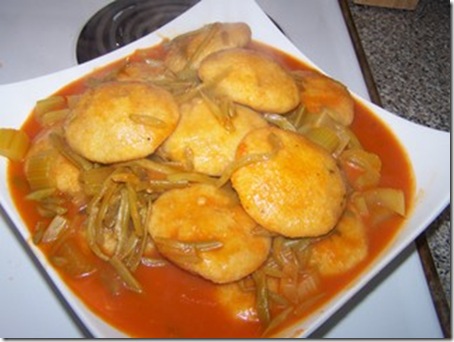
Ask any Iraqi “what is Yabsa w Timmen”? The answer will be imminent, with a “of course, are you kidding?" It is nothing but white beans in tomato soup and chopped meat. It is one of the most famous and considered by many as the most bombastic meal in Iraqi Kitchen.

After having Yabsa w Timmen, the best way to digest the food is to have an afternoon nap, otherwise the situation will be critical. I think Semolina soup is the only closest thing to the gravity Yabsa w Timmen can generate.

n1589494927_30085043_2179862

How many of you would be craving for Tishreeb? In other countries they are called Chickpea Casserole or Tishreeb Hummus. There are two types of Tishreeb known in Iraq: Tishreeb Laham, which made of a lot of very well cooked onion, saffron, chick-pea, what else? ah, big chops of lamb meat with bones, and beneath this whole chaotically-organized-food-making infrastructure we have small pieces of bread soaked in lamb soup.

Tishreeb.La7am

The second type of Tishreeb is “Tishreeb Dijaj”, which includes the same bombastic ingredients but substitute lamb meat with chicken.

I know one way to eat this thing: pull up your shirt arms – its going to be a mess, believe me, dive in your fingers (all of them) into the soup-soaked-bread plate, and cut a piece with your fingers nails and tip of your fingers on that thin bread. some of them would go for a wild round-like-move with the fingers and with the bread plug in a little from everything, and hop it quickly into the final destination - your mouth and stomach. For those not familiar with the rituals of eating Tishreeb, don’t wait too long or try to mud down that oily piece of bread… if you do that you won’t be able to catch up with the rest.

Anyway, that’s called: eating with bare hands, if no one noticed.

Anyone dare to say eeeeuwwwww or baahhh????

Speaking of Iraqi bread, that’s how people in villages and public places and even bakeries not long time ago bread was made

n736496520_1061145_2036

I know that Pizza is Italian, but I want here to tell about the first time I went to a restaurant specialized in serving Pizza. That small restaurant was located at Antar roundabout in Baghdad. That was in the late 1980’s, if I remember correctly. It consisted of just four or five small tables by the window where I used to watch the gradually building up of number of young men during noon, because girls from Al Hareery secondary school for girls has just ended their school day. The pizza I ordered was exactly the same as in the picture below.

2835_1073139267646_1201100819_185644_5965642_n

OK, that's enough for today

I hope that this post won’t cause some stomachache or move someone’s appetite, especially for those on diet.

Sunday, September 27, 2009

More from Iraq’s Old Days

I don’t want to give the impression that I am pro-monarch person regarding the political system in Iraq because of the many occasions where I put pictures of that period on my blog.

I am not anti-monarch either

I am only trying to reflect different aspects of the history of this beautiful country and its beautiful people

Click on each image to get larger view

I will start with Al Khadmiyah, Baghdad, in 1919

024_Al.Kadhum.1919

For those wondering how the first king ruled Iraq after the country creation looked like, This King Faisal, in traditional customs

025_King.Faisel

And below is another picture of the late king wearing western suit.

 001_King.Faisel.I

Below is a picture of the first leader of the Republic of Iraq.

002_Abdel.Kareem-Abdallah.Al.Omary

King Faisal II, the last king of Iraq before it became a republic

003_King.Faisal.II

Look carefully, for Baghdadis, look close, do you recognize the structure?

This is an aerial shot Abu Hanifa Mosque in Al Adhamiyah

004_Abu.Haneefa

According to the picture, this is Al Rasheed street in Baghdad, 1950, during some flood

005_Al.Rasheed.Street 

When I saw the picture below, I started to think, these are red double decker buses for public transport, which was used in Iraq till the fall of former regime. The picture below is like bus schedule of the lines these buses was taken around Baghdad.

No difference from these I see in bus / tram stops here in the Netherlands

Ironic… no, sad, because Iraq in late 1950 used to be no difference from any civilized country around the world

006_Bus.Schedule

This is a picture of a reception at the ministry of foreign affairs in Baghdad during monarch period.

Elegance!

007_Dinstinguished.Figures

Look at the way Iraqi Prime Minister, Noory Saeed bowing in front of the lady, the prestige in the way the head of the Iraqi government at that time is greeting a lady.

According to the source where I found the picture it is “Nuri Pasha Al Said. Probably in Pakistan. Ayoub Khan President of Pakistan in Background. Not sure if the lady is Mrs Ayoub Khan. Also to be seen in the photo, Burhan addin Bash'ayan and Fadhil Jamali”

008_Noory.Saaid

King Feisal's 2nd birthday. According to the source: “I have tagged the children I recognise.
In this photo: Muna Al Farisi, Salwan Baban, Anisa Sadoun, Aysar Sulaiman, Lamis Al Daftari, Nasser Al Haideri, salwa sati' Alhuseri, muhsin Suleiman”

009_King.Faisal.II.School

This picture is taken during the inauguration of King Faisal II.

Notice the guard drinking water!

Also… anyone noticed the similarities in the uniform those guards are wearing?

010_King.Faisal.II.Coronation 

This is from an evening with Um Kalthom. The source of the picture says that the people in the picture are: Jamal Baban, Najib Al Rawi, Mumtaz Al Omari, Fazila Daghistani, Suad Al Omari, Nimat Yasin Al Hashimi, Nuri Al Said, Salima Daghistani, Tawfiq Al Sweidi, Tahsin Qadry, Obeyd Al Mathaifi

011_Um.Kalthoom

I liked the comments from which I took the photos from and I will quote it here:

“All the models were Iraqi ladies from prominent families. Can anyone imagine this kind of event taking place in Iraq today????”

012_Iraqi.Fasion

The below picture of a fancy dress party where Iraqi Prime Miniter Noori Saeed, his wife Naima standing to the left of Photo. Their son Sabah and Ghazi Al Daghistani in Daghistani costume seated.

 014_Fancy.Dress.Party

Another picture of a reception party at the embassy in Tehran where King Faisal II is seen with other distinguished guests such as queen Shahinaz

015_Reception.At.Embassy

Royal hunting where King Faisal II is seen in the light jacket

016_Hunting

King Feisal's Birthday Al Rihab Palace . May 2nd 1946. Um Kalthum sang at this occasion

017_King.Feisal.II.Birthday

The below picture is from the Baghdad Pact session in 1955

018_Baghdad.Pact.Session

Iraqi Prime Minister, Noory Saeed (left) with Turkish politician Adnan Menderes at the airport.

019_Noory.Saaid.Airport

It has been said that the only statue remained untouched after the 2003 war was of Al Sadoon in central Baghdad.

The picture below is from the unveiling ceremony of Abdul Muhsin Al Sadoun's statue. Baghdad May 20th 1933

020_Ceremony.Al.Sadoon.Street

Abdel Kareem Qasim in one of his visits

021_Abdel.Kareem

This is an illustration of how Al Khayyam cinema theater

022_Al.Khayam.Cinema